Community Empowerment
Forest in danger
Over the last two decades, the forests have been demarcated. The boundaries outline those areas of forest that are natural and in which no formal cultivation or expansion is allowed. The surrounding areas have also been demarcated, showing areas in which people live, actively manage forest products (such as transplanted wild coffee) and cultivate the land. By combining different forest and farming activities, people living in and around the forests are better able to make a living.
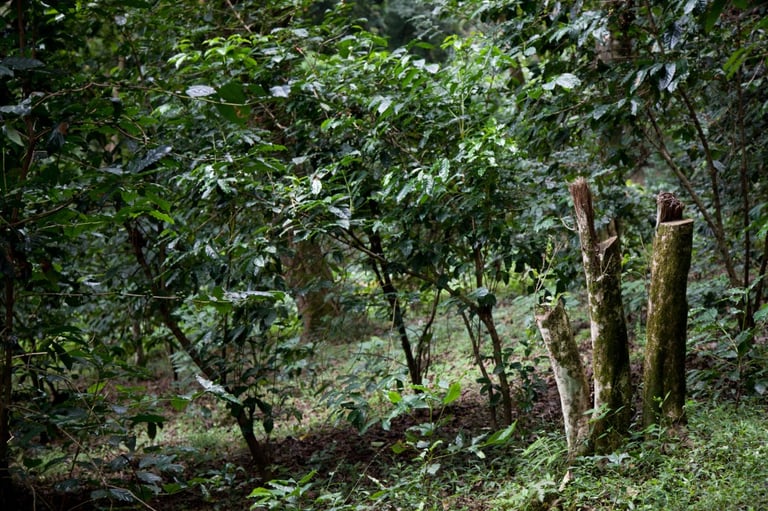
Tree stumps left after land was cleared for coffee cultivation in the mountain forest in Bench Sheko Woreda.
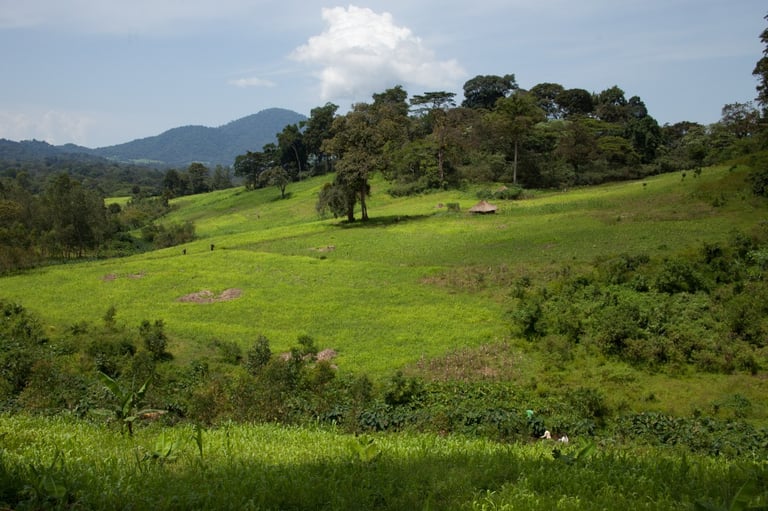
Farmland cleared from the mountain rainforest in Bench Sheko Woreda.
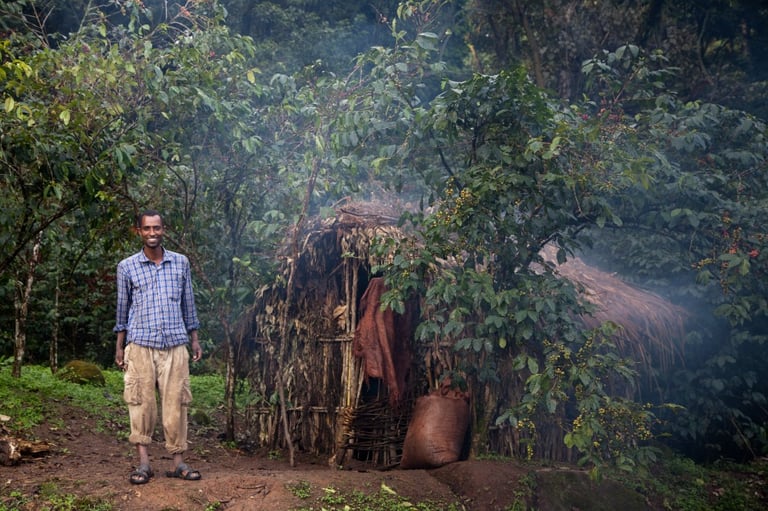
Temporary hut built at the edge of the mountain forest near plots of cultivated coffee by planters during coffee harvest season. Bench Sheko Woreda.
Agreement
A central feature of the formal agreements between communities and local government is that people are allowed to sustainably utilise forest products in return for managing the forests. This allows them to build on their indigenous knowledge and deep engagement with the forests. Each community has its own forest management group, responsible for forest patrols and control. These groups have received training, support and guidance to help build on their existing indigenous knowledge, and to help manage illegal encroachment and report perpetrators. Their work is also supported by legally recognised communal land certificates. These certificates are valid in Ethiopian legislation and can be used to defend a community’s rights to the forests.

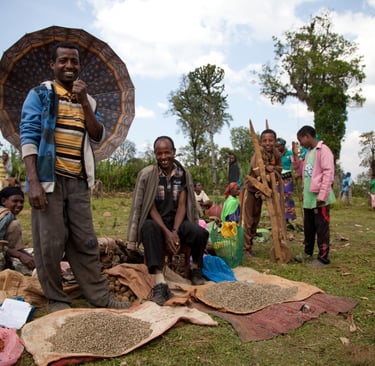
Selling coffee and spices at a village market
Community Forest Management
This element of community forest management is closely tied to the biodiversity surveys, data analysis, remote sensing and wildlife monitoring, all of which provide additional evidence to support forest management groups to demonstrate the importance and impact of their work.
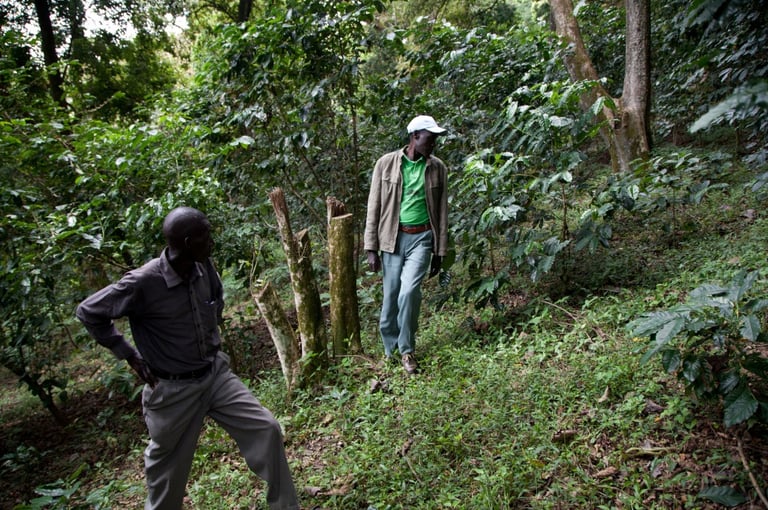
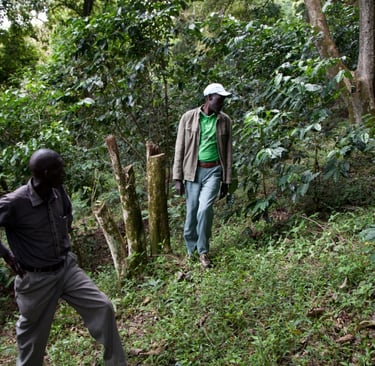
Dachu Zeetu, chairman of the Bench Sheko Woreda Forest Management Association, monitoring the status of the forest in Shimi Kebele, Bench Sheko Woreda.
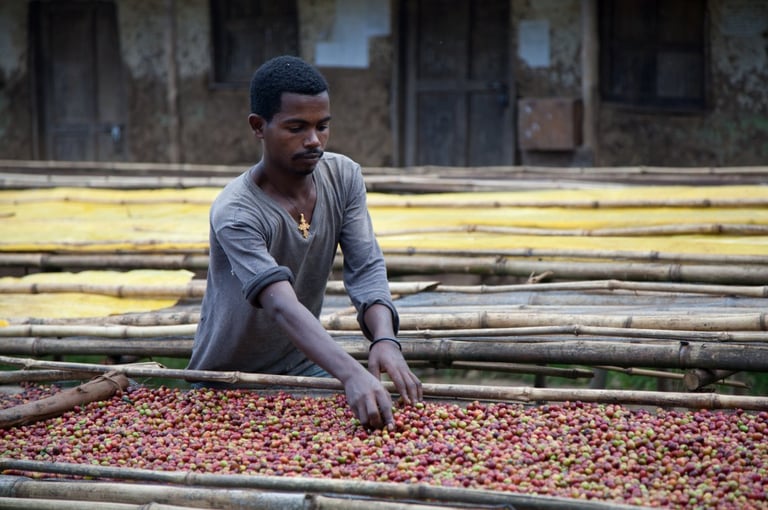
Adugna Abebe, wild forest coffee picker in Gizmeret, Bench Sheko Woreda. Adugna was selected and authorized by the Sheko Woreda Forest Management Association to pick wild coffee that grows in the natural forest, which he then sells to the Amora Gedel Wild Coffee Marketing Cooperative, which dries, processes and markets the specialty coffee.