Forest Friendly Honey
Beekeepers
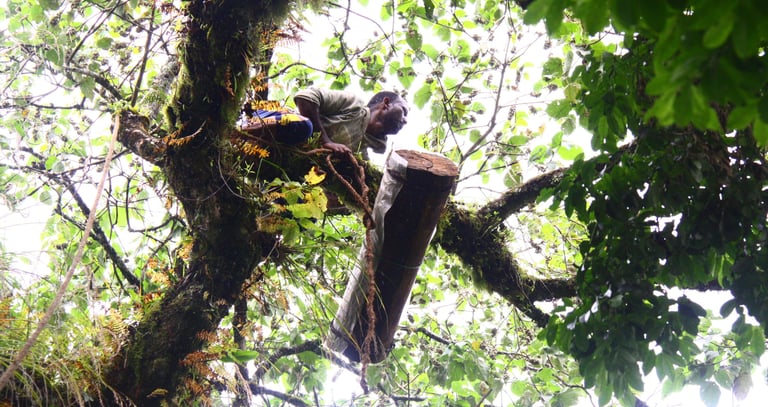
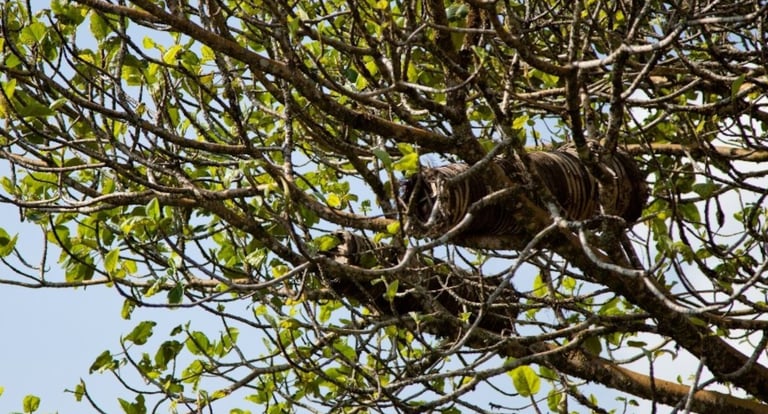
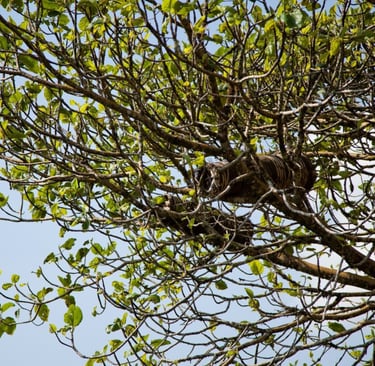
Beekeepers have long been producing honey in the afromontane forests of Anderacha. These beekeepers have specialised how to keep bees deep in the forest. Using hives made from hollowed out logs or woven bamboo from the forest and climbing high into the canopy, sometimes 30m up, with only a long rope to place their hives, the Anderachan beekeepers create aerial apiaries, protecting them from predators. This beekeeping system allows the beekeepers to leave their hives deep in the forest where the bees have access to the best forage.
(image top: Beekeeper Assefa Endeshaw hangs his new log beehive high in the tree canopy to protect it from predators.)
(image bottom: The monkey’s chair tree (Polyscias fulva) is a favoured tree for hanging beehives as its straight trunk is difficult for predators to climb and the branches can support many hives with ease.
Top-bar beehives
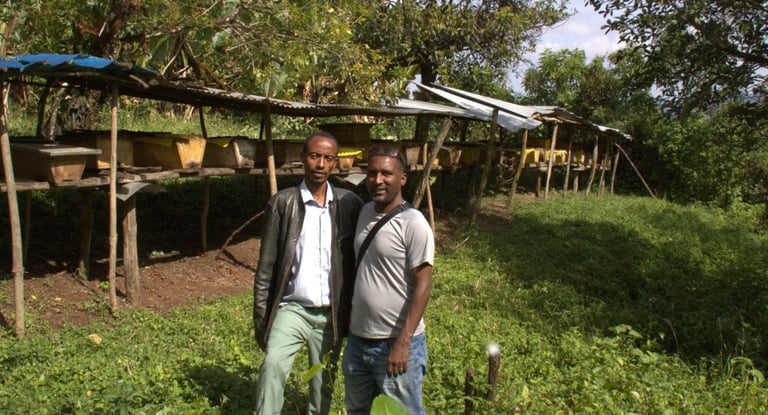
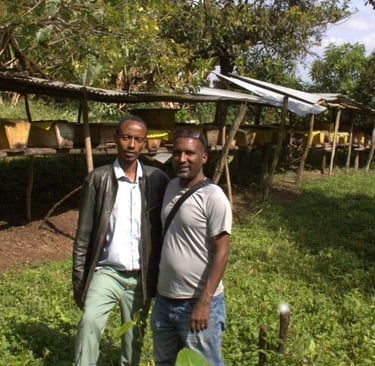
Closer to home beekeepers are also seen using top-bar beehives. These allow the beekeepers the convenience of keeping their bees at ground level, allowing more people to keep bees, but in doing so they cannot leave their hives in forest and must keep them near to home for protection.
(image: Many Beekeepers keep some of their hives closer to home. Top-bar hives like these allow for beekeeping at ground level.)
Getemé honey
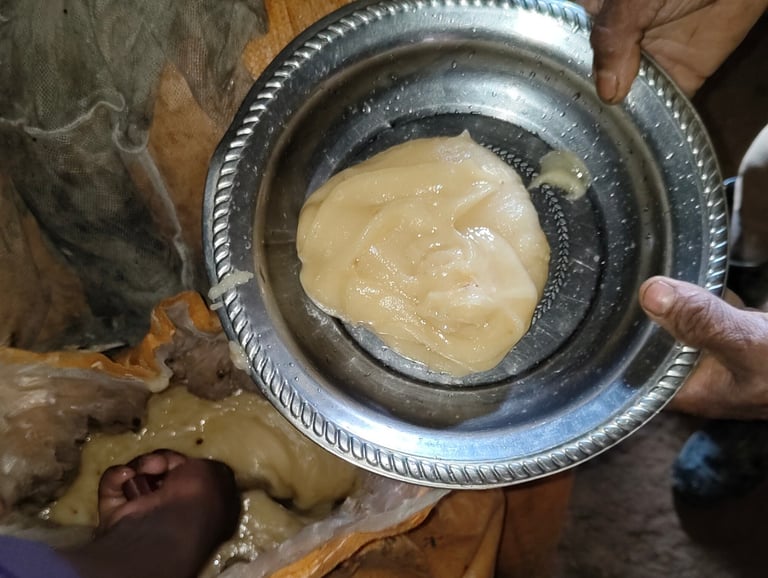
All the effort of placing beehives in the deep forest pays off when the time comes to harvest. Anderacha is known for producing the special Getemé honey. Made from the nectar of the Schefflera abyssinica tree this monofloral honey variety is prized due to its colour and texture. A white, opaque honey with a light flavour Getemé honey has small, fine crystals that naturally form a creamed honey texture.
Anderachan beekeepers also produce a multifloral honey that combines the different flavours of the forest into a medium dark rich honey.
(image: Getemé honey, made from the nectar of the schefflera abyssinica tree is a prized honey from this region. The white colour and creamy texture, means this sweet honey is in high demand.)
Local cooperatives
These honey varieties are sold to local cooperatives who are able to combine the harvests from the many beekeepers in the area and use the bulk honey to attract traders and exporters into the area to purchase honey. With the honey coming from the natural afromontane forest there is no risk of pesticide or other contaminants getting into the honey and cooperatives are currently undergoing the process of becoming organic certified which will help them sell their honey.
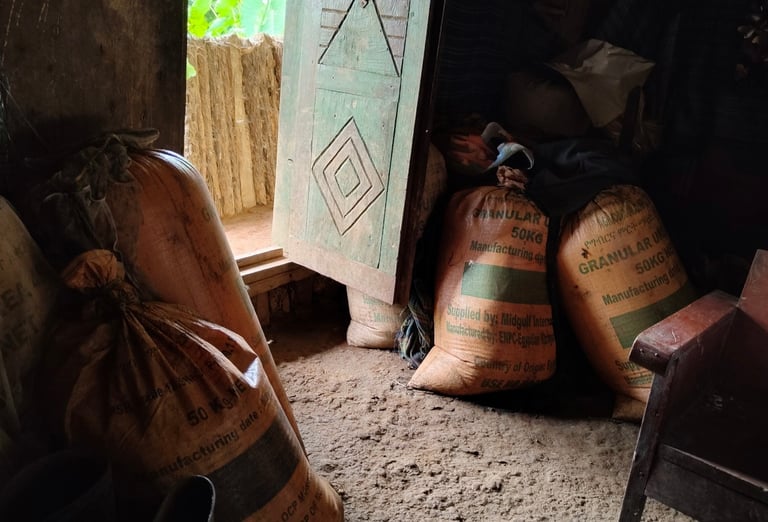
(image: Sacks of geteme honey stored in a home while the beekeeper waits for the honey price to rise so that he can make more money.)
Income from honey
With the large number of beekeepers in Anderacha all gaining an income from the honey produced from the forest there is great incentive for the beekeepers to help protect the forest. Forested land in the area is under threat as many see conventional agriculture as a better income generator and so are clearing forest land to grow crops. Beekeepers can resist these pressures as they can gain good income from their honey and wax sales so they don’t have to resort to forest harming activities, and they will help fight against deforestation as it threatens their livelihood.
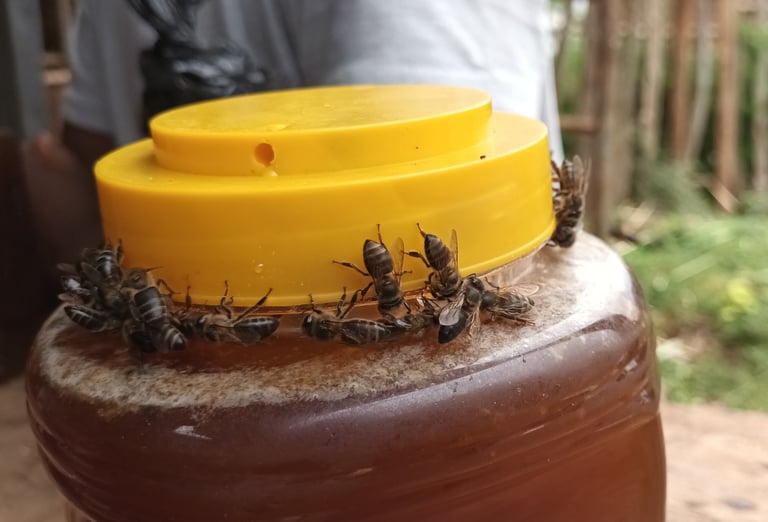
(image: Honey is sold locally through traders and union shops in plastic bottles.)